Serve the People! sign as Liu Lian’s summons
Serve the People!The Serve the People! sign as Liu Lian’s summons is a recurring action in which Liu Lian moves the sign from its customary place to signal that she wants Wu Dawang upstairs. The gesture converts a household emblem of political service into a private code: it initiates their affair without requiring an explicit conversation, while allowing the two to maintain the appearance of their assigned roles. As the signal spreads from table to worktop, garden, and other rooms, the sign becomes both the affair’s practical mechanism and its most concentrated irony.
Establishing the Signal
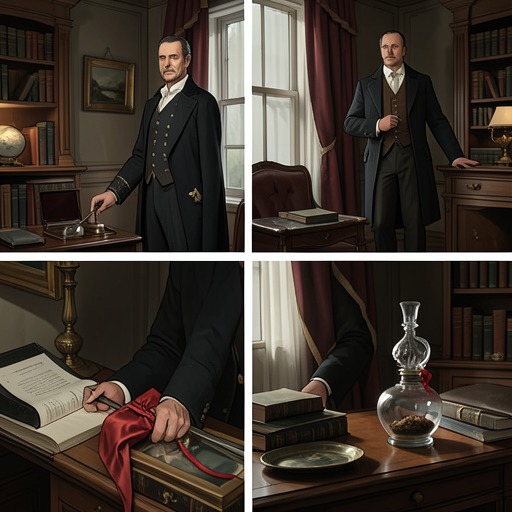
At dusk, after dinner, Wu Dawang is clearing the table in the Division Commander’s house when Liu Lian sets the sign on the mahogany dining table. She explains that whenever it is absent from its usual place, he is to come upstairs because she needs him. She taps the wood against the table, then goes upstairs as she does after meals. Wu Dawang is left uncertain about what is expected, but the sign’s changed position has given him a message he cannot yet fully interpret.
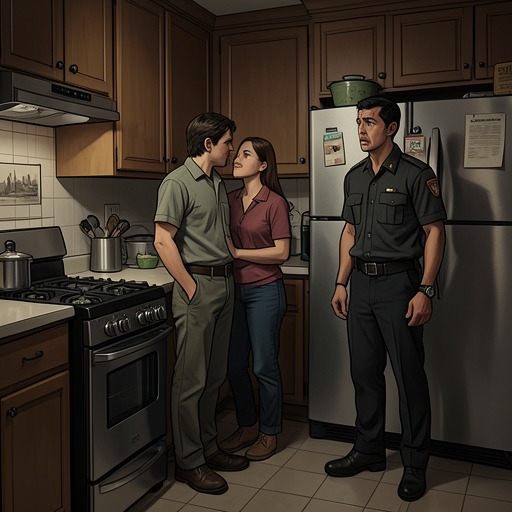
The signal is made legible through repetition. On a later occasion, Liu Lian again reminds him that its absence from the table means she wants him upstairs. Wu Dawang hurries away, then splashes cold water on his sweat-soaked face at the kitchen tap. The response captures the summons’ double effect: it is an instruction that appears ordinary within the household routine, yet it unsettles him because he recognizes its personal implication.
The sign’s appearance on the kitchen worktop makes that implication harder to ignore. Returning from the vegetable garden with pak choi intended for Liu Lian’s breakfast, Wu Dawang sees it and drops the vegetables stem by stem. He understands that something consequential is about to happen, and that the danger to his reputation and prospects does not make him immune to the attraction. The summons initiates a sequence he anticipates as both threatening and difficult to resist.
A Private Code in a Public Household
Once the affair begins, Liu Lian uses the sign in ways that let the summons blend into domestic life. She watches Wu Dawang in the garden, then returns holding the sign behind her back. After placing it a short distance from him, she goes toward the house, saying she is going to get water when he calls after her. He carries on working until he notices the sign; then he takes it indoors, puts it on the dining table, and goes upstairs. Their arrangement depends on this small, repeatable movement rather than an overt declaration.
The signal also establishes a private set of expectations between them. Wu Dawang responds by going upstairs; afterward, Liu Lian’s treatment of him varies according to whether she considers him satisfactory. She may prepare the food he wants, or give him domestic tasks such as washing her clothes, cleaning her ears, or cutting her nails. The sign thus calls him into a relationship that borrows the language of household service and turns it into a private game, while the unequal roles of officer’s wife and orderly remain present beneath their intimacy.
The code becomes increasingly mobile. The sign may appear in a flowering shrub while Wu Dawang is weeding, hang from a vine as he prunes it, or lie in wait for him when he returns from shopping. Its movement carries the summons beyond the dining table and makes it a recurring element in the garden and the house. The lovers meet in domestic rooms and even in the Division Commander’s conference room; under cover of darkness, they also meet beneath the vine trellis. Wherever the sign turns up, it redirects Wu Dawang’s attention from other concerns toward Liu Lian and their affair.
Secrecy and Performance
The signal works because the lovers’ conduct can still pass as ordinary service to outsiders. Wu Dawang continues tending the household garden and flowers, tasks that previously belonged to his work as orderly. Now those same activities help sustain a public appearance that nothing has changed. His superiors agree that he may sleep at the house after Liu Lian reports that she is afraid to be there alone and says his service has improved. That arrangement gives him a legitimate reason to remain, even as the private meaning of the sign changes his relationship to the house.
The novel explicitly presents this arrangement as performance: Wu Dawang and Liu Lian play their public parts as Division Commander’s orderly and wife while their private relationship develops behind the facade. The sign is central to that split. In its public meaning, it belongs to the revolutionary language of service; in their private practice, its altered position communicates Liu Lian’s summons. Their affair acquires routines and rules of its own, but those routines remain concealed inside the household roles that make their shared presence appear proper.
The Sign’s Reversal and Significance
The code’s meaning also makes the sign a reminder of Wu Dawang’s subordinate position. During a later domestic quarrel, he speaks to Liu Lian in the tone he would use with his wife, expecting her to wash his clothes. Liu Lian points silently at the sign, with a faintly mocking expression, and turns away. Wu Dawang sees its smoke-stained text and images as a reminder of the role he has been assigned in the household and of the inferior status he can escape only in fantasy. The object that has facilitated their intimacy can therefore also reassert the hierarchy between them.
The contrast gives the summons its broader significance. The sign does not cease to be a public political emblem; instead, its official message and private use coexist. Its changing location makes desire look like an instruction embedded in routine, while the orderly’s service becomes both cover for the affair and a reminder of his limited power. Repeatedly, Wu Dawang responds to the object as though its placement were decisive: the signal governs movement through the house even as its public meaning remains unchanged. By turning a familiar household sign into a silent summons, the episode binds the lovers’ private arrangement to the military hierarchy and revolutionary language they continue to perform.